What exactly is a Swedish massage treatment?
There are plenty of different massage therapy styles around, from sports and deep tissue to lymphatic drainage. And each type offers a different type of support, whether you’re looking to relieve tense shoulders, regulate your nervous system, or assist with sports recovery.
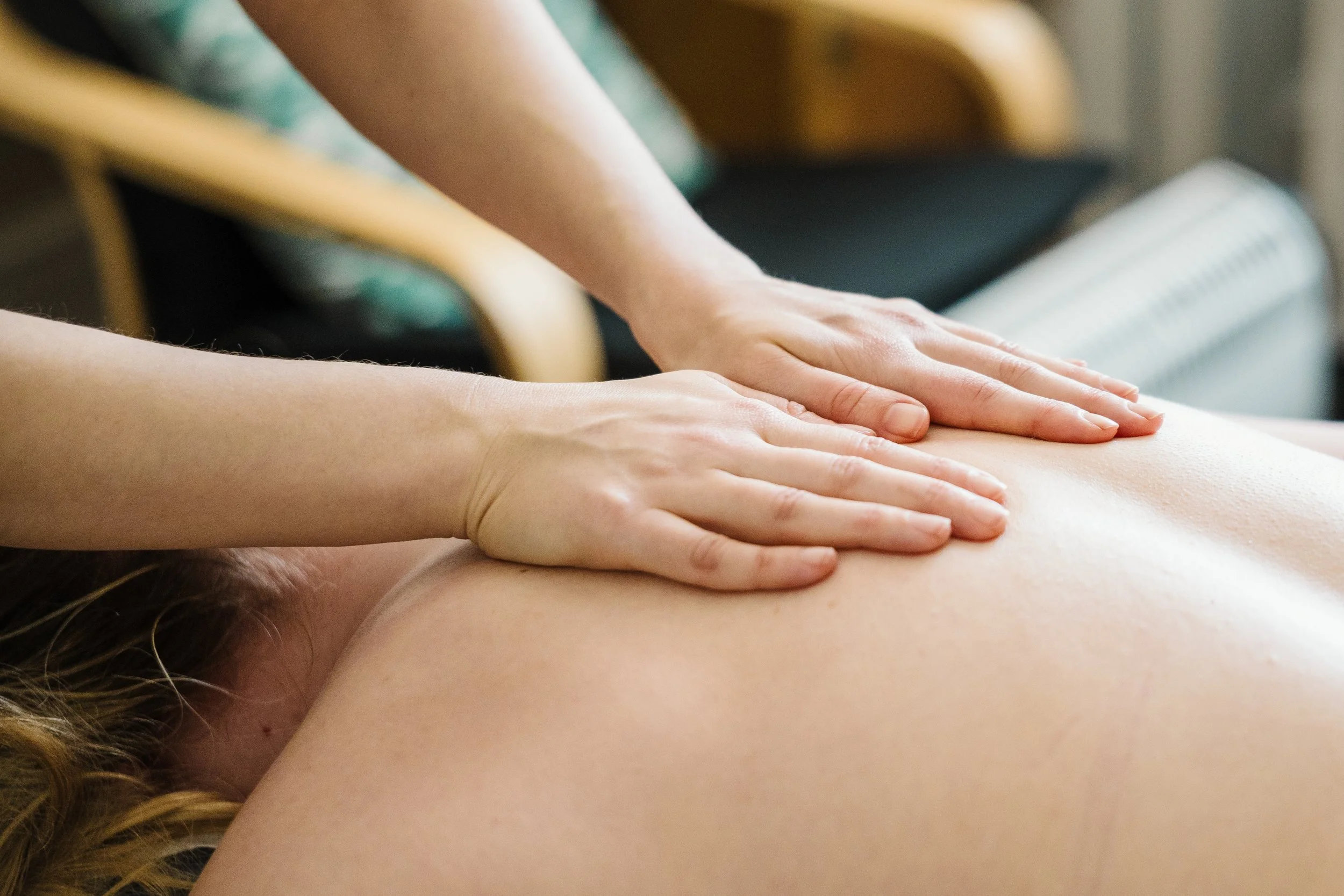
One style you might see advertised a lot is ‘Swedish’ massage. But what exactly does Swedish massage therapy entail? Let’s take a look at the core elements and benefits of Swedish massage therapy, so you can work out if this is the style for you.
What is Swedish massage therapy?
In a nutshell, Swedish massage therapy is your classic massage style centred around overall relaxation and light muscle tension relief. Massage therapists providing this type of treatment tend to use a medium pressure to help work out any areas of tightness while also helping the nervous system shift into ‘rest and digest’ mode.
For me as a massage therapist trained in the Swedish style, I love the fact that this type of massage offers a sense of balance. It’s great for really getting into areas of muscle tension when needed (especially around the neck and shoulders) without being too intense. At the same time, it’s gentle enough to help you drift into a deep state of relaxation — you might even find yourself nodding off!
What techniques are used in Swedish massage?
There are five archetypal techniques in Swedish massage, and each one offers a different benefit. When brought together in a mindful sequence, they create a beautiful sense of flow, again striking the balance between deeper tissue release and overall relaxation.
1. Effleurage
Effleurage movements are long, sweeping motions using the palms of the hands. They can be light or medium pressure and help warm up the tissues so that we can then apply deeper pressure to work through any fibrous adhesions (often known as ‘knots’).
I always start my massage treatments with effleurage to introduce my touch and assess where you may be holding most tension. These gliding motions also help link other moves together so there is a continuous sense of flow without sudden jolts of changes, which can take you out of the relaxation state.
2. Petrissage
Here’s where we can really work on any muscle tightness. Petrissage is kneading, and it covers a whole range of techniques based on compressing, rolling, and lifting to help soften areas of tension and restore range of motion. The stretching effect helps break down any ‘knots’ while boosting microcirculation and loosening any tightness in the fascia and connective tissues, as well as the muscles themselves.
Petrissage can be really effective on big muscles that take the brunt of everyday life — like the trapezius, which covers the back of the neck, shoulder blades, and upper mid back. If you work at a desk or tend to be on your phone a lot, chances are this is an area that could do with a little bit of TLC!
3. Tapotement
Tapotement is a technique based on fast, percussive motions. If you’ve ever seen that speedy karate chop style movement, that’s tapotement! To be specific, that’s a technique known as ‘hacking’, and while it is effective, it’s not as harsh as it may look! With the right technique of soft, loose, hands, it gently yet firmly increases blood flow and invigorates tired muscles.
Other tapotement classics include:
Cupping: The hands makes loose cups and alternate to trap a cushion of air above the skin. It’s also great for stimulating nerves and improving circulation.
Beating: Again, this isn’t as harsh as it sounds! Using loose fists, massage therapists will lightly and rhymically drum with their fingers (just below the knuckles). As with all other forms of tapotement, it should really only be applied on fleshier areas like the back and outer side of the thighs.
Pounding: This move is similar to beating but has the thumbs pointing up. It tends to be slower, too.
For full transparency, I don’t tend to apply much tapotement in my massage treatments, as my focus tends to be on relaxation and nervous system regulation rather than invigoration. That said, I will always tailor my treatments to you and your body, and if tapotement is the best technique to support you, then it will absolutely be included.
4. Friction
When we find a stubborn area of tension (an adhesion or ‘knot’), a friction motion can be really effective in loosening it, breaking down the entanglement of fibres. Frictions are deep, targeted circular motions using the fingertips, thumbs, or sometimes the heels of the hands.
Because these are very deep movements, they can feel a little tender, so I’ll always check in on how you’re finding the pressure. You’ll also notice a lot of relief once an adhesion has been worked on in this way!
5. Vibration
This technique focuses more on the soft tissues rather than the muscles themselves. It’s a case of pressing and releasing in a rapid oscillation with the fingertips or palms of the hands. The motion can help release any lingering tension, and vibration can be used towards the end of a massage therapy treatment to calm the nervous system.
What Swedish massage therapy treatments are available in Cardiff?
I’m pleased to offer 30-minute to 90-minute Swedish massage treatments that provide muscle tension relief while offering a safe, calming space for you to relax and set aside time for self-care.
You can book:
A 30-minute or 45-minute Upper Body Reset
This Swedish massage treatment focuses on the back, neck, and shoulders to provide relaxation and tension relief. It’s perfect for those who work at a desk and experience a lot of neck and shoulder discomfort.
A 60-minute Full Body Restore
A 60-minute Swedish Massage treatment that covers the back, neck, and shoulders, as well as your legs, feet, and arms. This option is designed to leave you feeling calm yet restored.
A 75-minute or 90-minute Full Body Unwind
This is an extended Swedish Massage treatment providing full-body relaxation and muscle tension relief.
It covers your back, neck, and shoulders, as well as your legs, arms, decolletage, face, and scalp. Additional time will be spent on the area you feel you need most focus on (for example, your shoulders and neck to support upper body wellness, or your face if you’d like more gentle relaxation).
Ready for some relaxation?
If you’re looking for calming, nurturing massage therapy treatments in Cardiff, please don’t hesitate to get in touch. You can book a massage treatment directly through my Setmore page (that’s the best way to see my latest availability) or email hello@lunasawellness.co.uk if you have any questions.